Invite honestly
Say the length, energy, and learning shape of the evening.
TABLE CIRCLE / 01
A generous game night starts before the first rule. Name the time, bring people into the circle, make the first decision visible, and leave room for a question, a pause, or a different plan.
Set the circle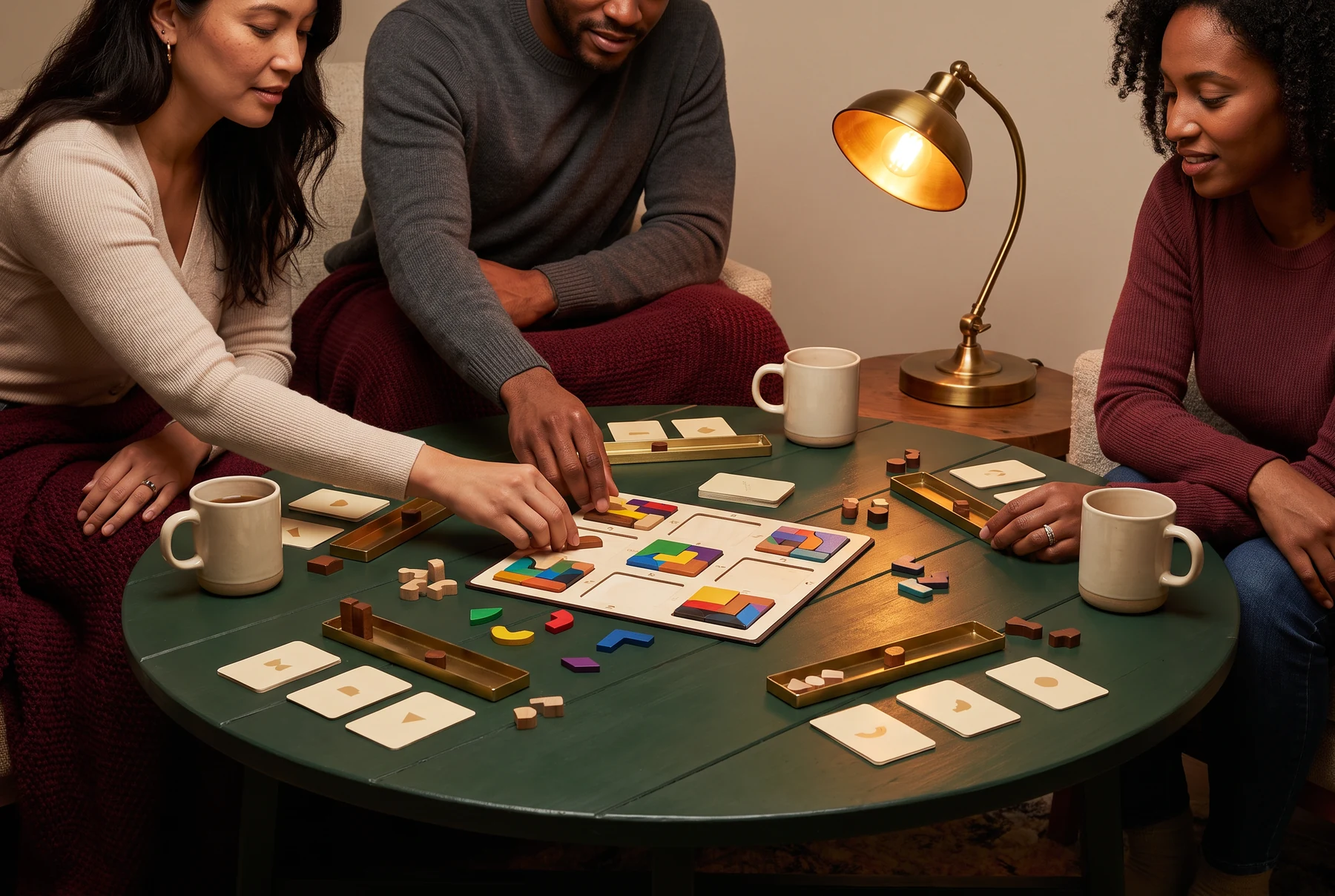
The circle before the game
Say the length, energy, and learning shape of the evening.
Put shared pieces, seats, light and reference cards in reach.
Show one turn, then return the decision to the player.
Let people leave, pause, pack up and plan another time.
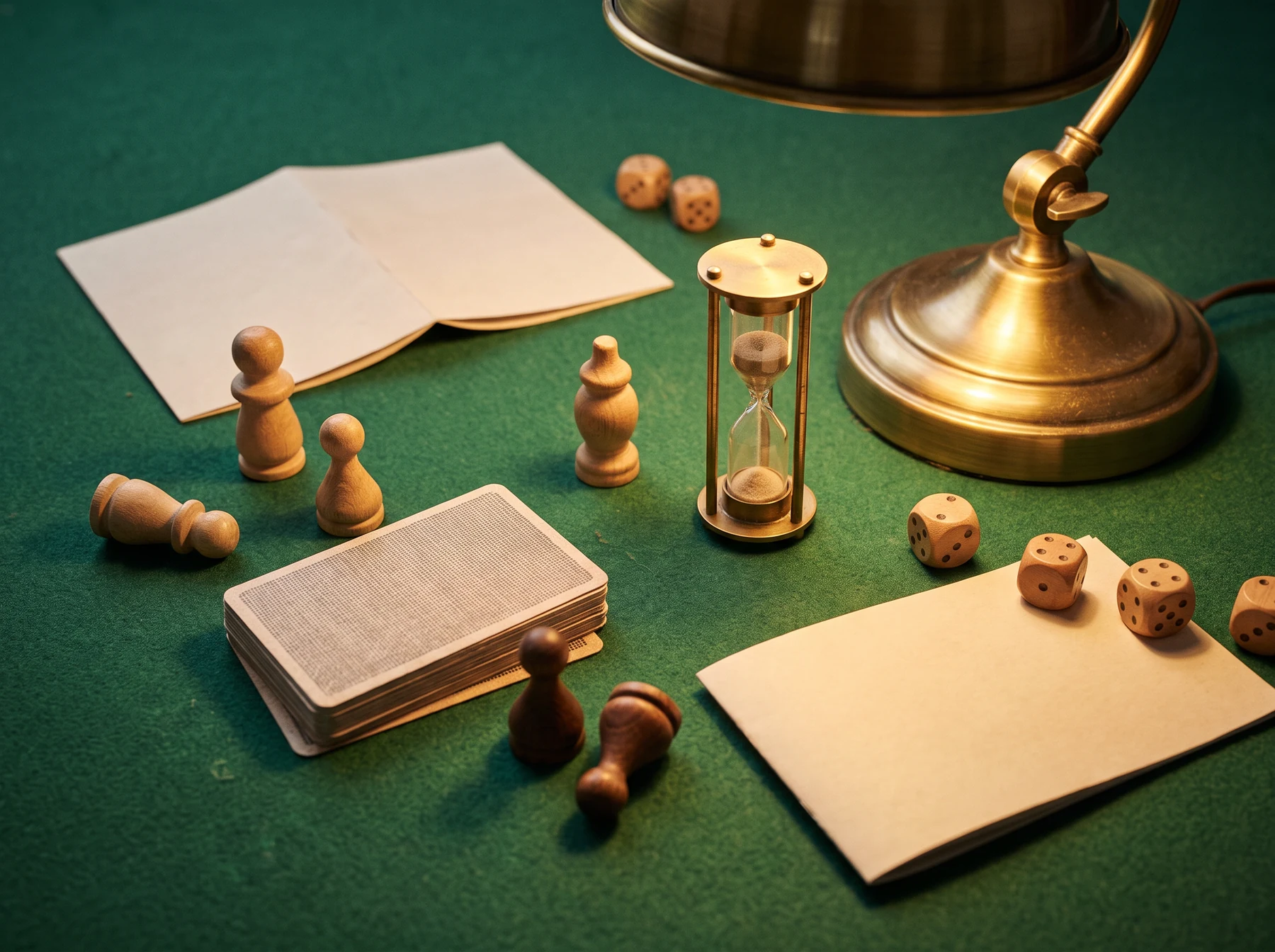
Make the first turn visible
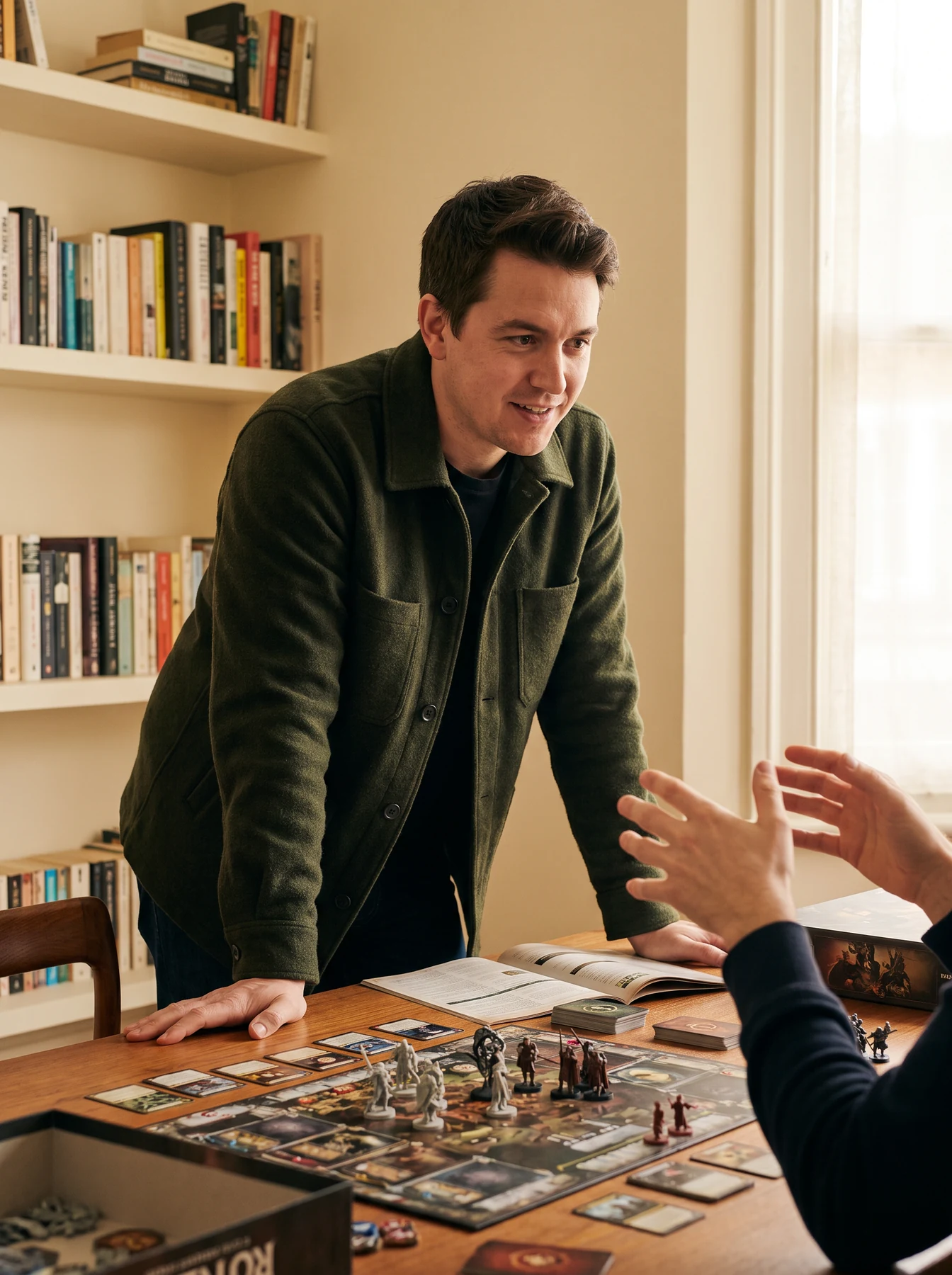
Separate personal and shared components. Point to the current decision. Explain the loop with a tiny example: choose, resolve, update. The aim is not to say every rule before anyone has touched the table.
Goal What are we trying to make, collect, protect or discover?
Turn What can I choose right now?
Return What changes before the next person acts?
The rhythm of a table
Welcome people and show the shared objective.
Protect each person’s chance to decide and ask.
Make a rules check, water break, or reset ordinary.
Pack together and keep the next invitation possible.
Choose a route
Choose a setup where the goal is concrete, the first action can be demonstrated, and an early mistake does not remove a person from the conversation. Say that the opening round is for learning, not evaluation.
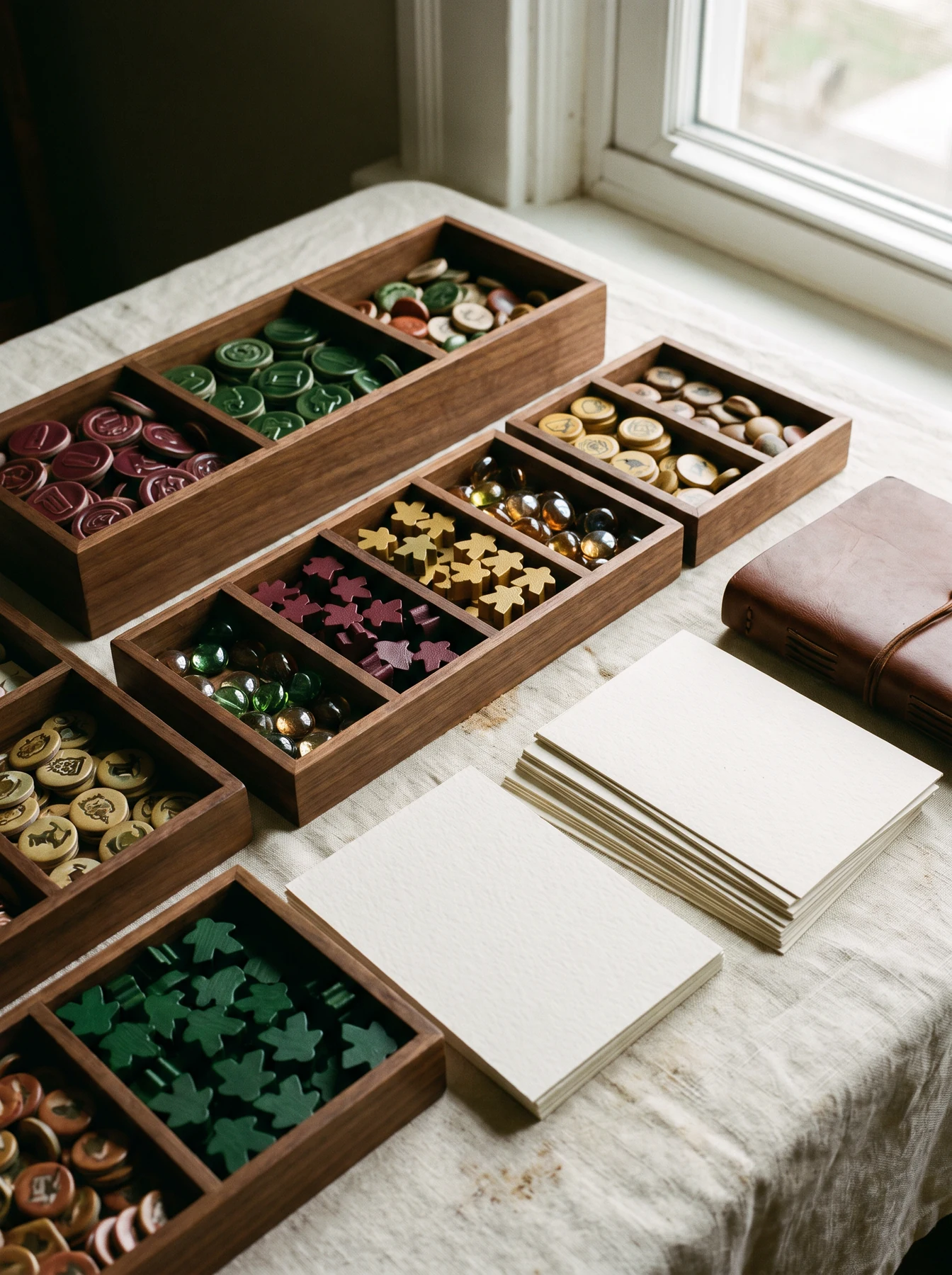
Invite experienced players to model a turn and manage setup, not to choose for others. Newer players need a turn that belongs to them more than a running commentary on the best move.
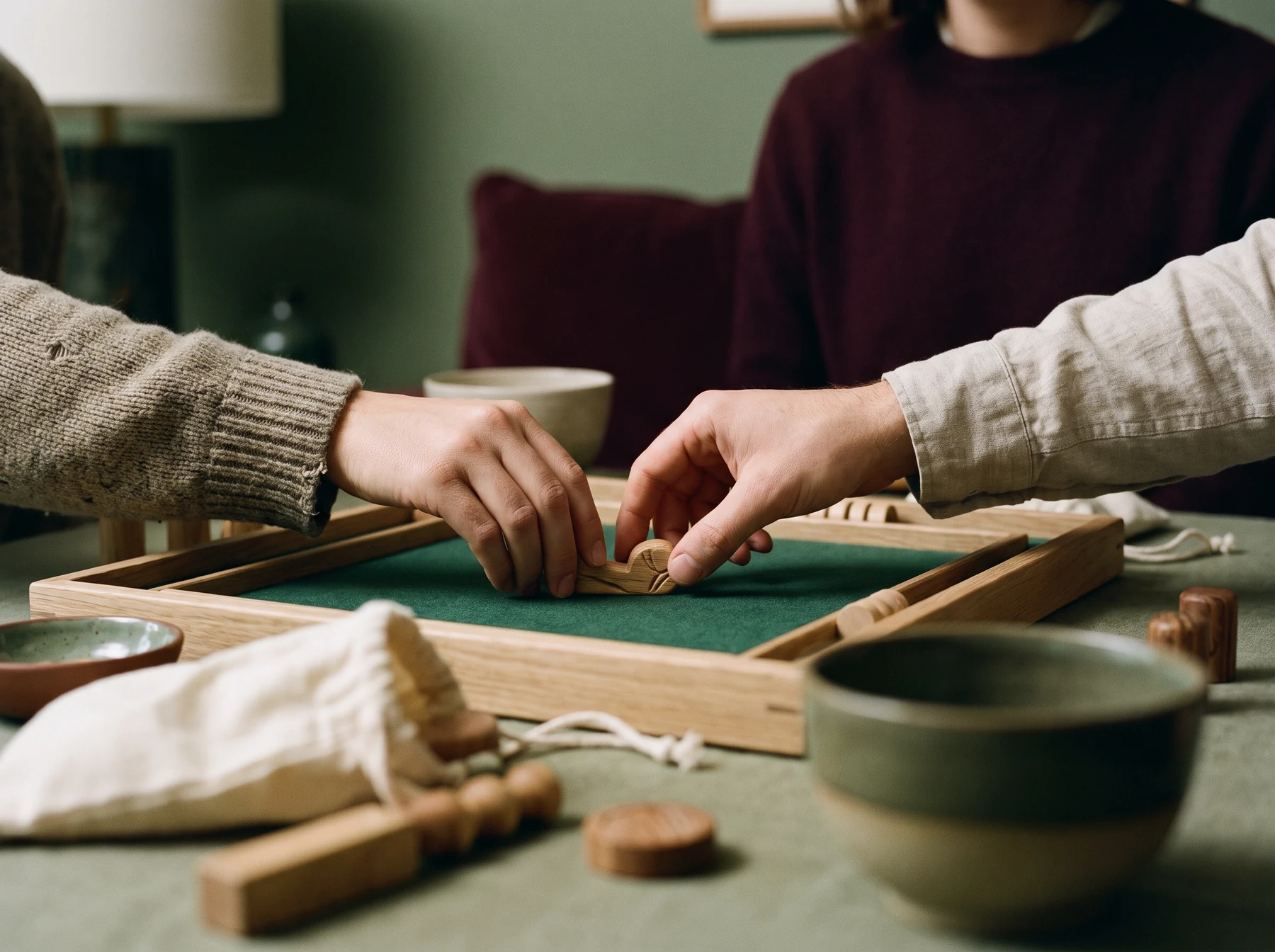
For a quieter room, name a clear stopping point, make components easy to reach, and choose a pace that lets people think without filling every pause. A shorter finish is a good finish.
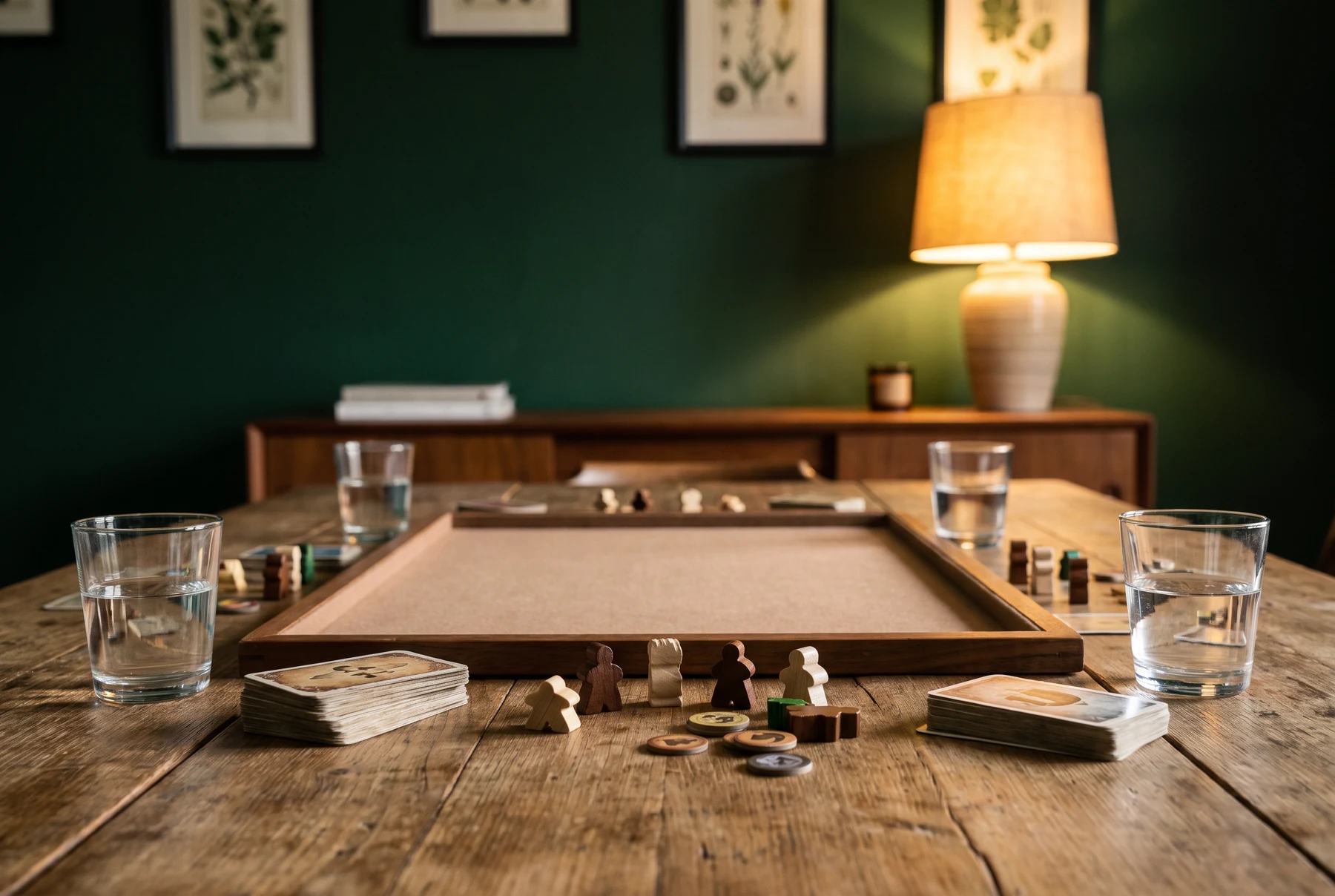
For the host
Host the conditions rather than the outcome. If the group loses the thread, name the pause, find the last shared point, read only the relevant rule, and put the next choice back in the player’s hands.
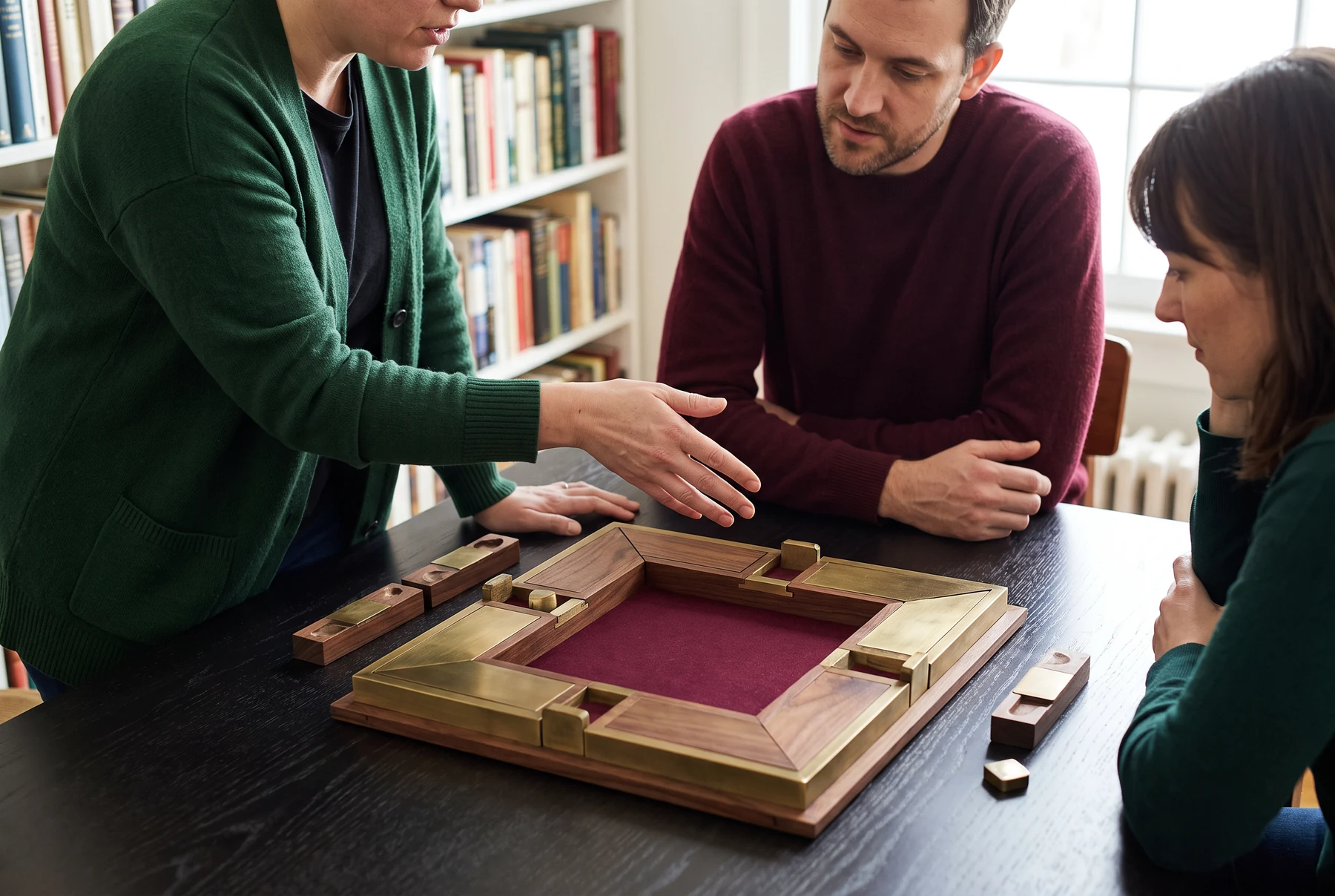
Useful table objects
Use it only with consent and keep it a shared tool, never a punishment.
A short reminder can help a player re-enter without asking for every rule again.
They can make components easier to see and reach without changing the game.

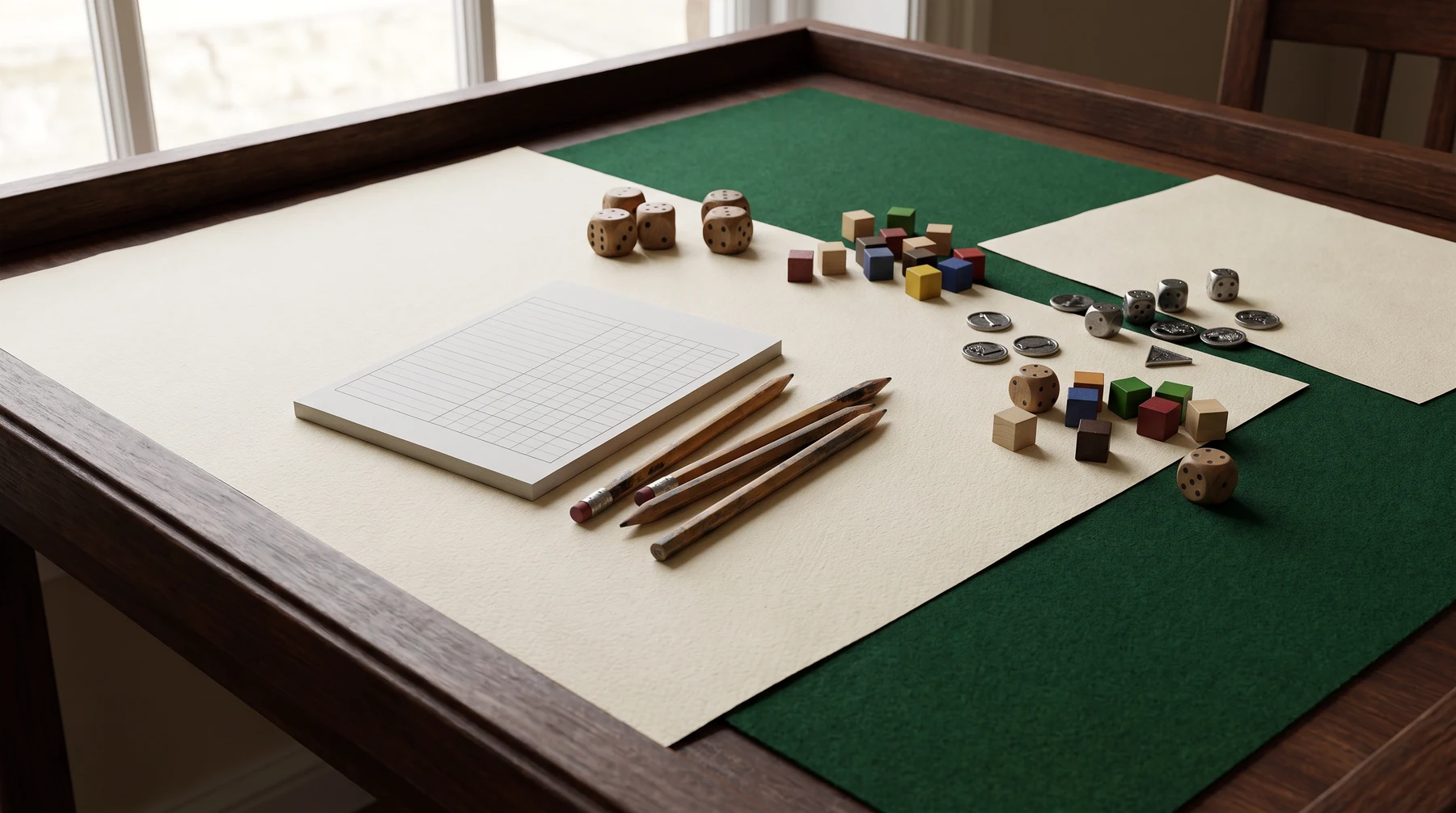
Private host check
Questions for play
Site note
The form prepares a local email draft; it does not send a booking, collect payment, or create an account.